graciegracie
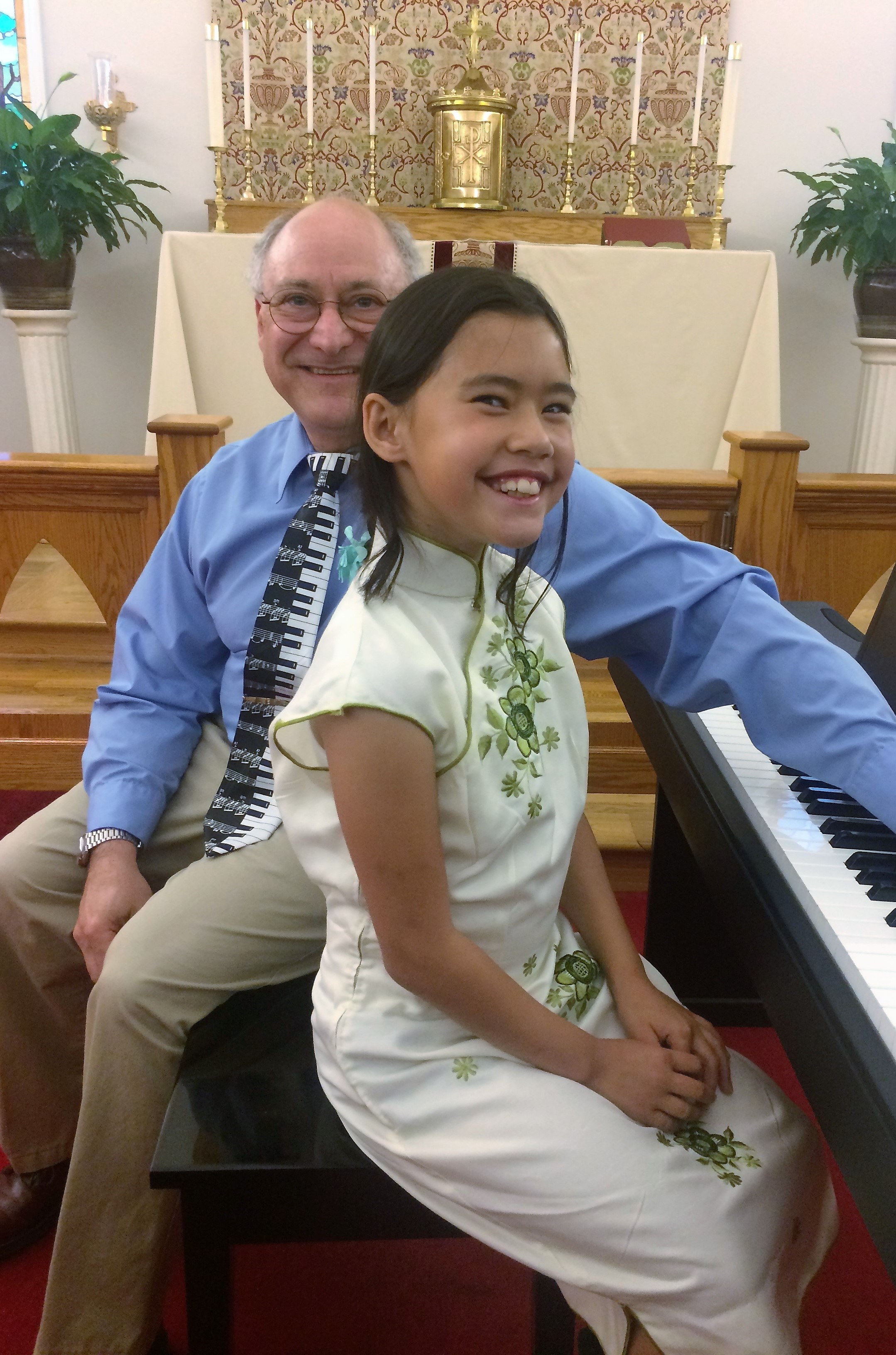
Gracie playing at her first recital, and afterward elated at having done well!

Fall Recital 2009 for Mr. James' Studio

Friday, December 18th at 6:00pm

Holy Cross Anglican Church, Hwy. 96, Franklin

condos amanda Elisha
      Three brothers with Mr. James                  Amanda at her 1st recital            Elisha & Mr. James playing a duet


James
I was once a kid, too! This is me at 16.

James' Music Studio
Recital Program 12/18/09

David Wu


Radetzky March — Johann Strauss

Karina Rovey


Angels We Have Heard on High — French

Mark Austin


Merrily We Roll Along — Eddie Cantor

Teresa Bono


Jolly Old St. Nicholas — Traditional

Alexander Bokharaei


Hush Little Baby — American folksong

Justin Condidorio


Vivace — Ferdinando Carulli
Night of the Tarantella — Fabers

Somyrrh Washam


The Walking Song — Fabers

Jaran Huggins


Christmas Time is Here — Guaraldi

Brandon Condidorio


Sonata in A, Mvt. I — George Berg

Courtney Grable


Twinkle, Twinkle & Ode to Joy

Trevor Condidorio


Bearcat Boogie — Nancy & Randall Faber
Super Mario Brothers — Koji Kondo

Bryard Huggins


Omaggio ("Tribute") — Yanni, arr. Huggins

Belle Huang


This Land is Your Land — Woodie Guthrie

Elisha Reed


The Riddle Song —  American Folk
March of the English Guard — Clarke

Casey Kendall


Morning Prayer — P. I. Tchaikovsky

Gracie Jarvis


Old MacDonald Had a Song — arr. Fabers

Michael White


Merrily I Roll Along — Anon.

Amanda Tian


Jingle Bells — J. Pierpont

Sedona VanGorden


We Three Kings — J. H .Hopkins, Jr.

Shiloh Washam


Alouette — French folksong

Gracie VanLiere


Deck the Hall — English carol

Olivia Donahue


We Wish You a Merry Christmas

keys

Recital Etiquette

Recital is a warm and friendly event where students can exhibit the skills acquired during the term. Family and fellow students will be there to enjoy the performances. No one is competing with another student. All ages and levels will be represented. To help things run smoothly, please observe the following guidelines:

Dress nicely as you would for church or any special affair: dress shirt for boys, no sneakers (tie, suit or jacket is optional); slacks, skirt and blouse or dress for girls, and dress shoes (no platform shoes or athletic shoes).

Arrive a few minutes before the recital begins if you want to warm up. If you are using your music, remember your book! (Memorizaton is encouraged but not required.)

Family and friends may take their seats in the sanctuary. Students should sit with their relatives during the program.

Remember to turn off cell phones and pagers—or set on vibrate.

When your name is called, walk (don’t run) to the piano with confidence and be seated on the bench. Do not bow before you play--only afterward.

Take a moment to think about your piece before you start to play. Maintain good posture -- don't slouch or let your legs swing.

If you make a mistake, stay calm. Try not to make a face! Just continue to play. Most people will not even notice. If you lose your place, find a good starting spot and finish gracefully.

The audience should respect every player and remain quiet during each performance. Video cameras are allowed to be used from your seat, but flash photography should wait till the performer is finished.

If you are playing more than one selection, pause a few seconds between pieces and bow only after the last piece is finished.

When done, rise (don't leap) from the bench, look at the audience, smile sweetly and take a bow.

Walk back to sit with your family. Please stay for the entire recital which will not exceed an hour.

keys WHY ARE RECITALS BENEFICIAL?

Performing is a vital component of the discipline of music study. Students grow by participating in recitals, auditions, competitions, or festivals. Students who learn to perform develop many character traits that distinguish them from those who have not had such an opportunity. Performing is a natural outgrowth of the discipline acquired by students who do well in music lessons. They learn to arrive on time for lessons, to schedule practice time regularly, and to prepare the material assigned to them. Students gain more than the ability to create music on their instrument, or an appreciation for music. They can realize they have the ability and skills to analyze and overcome new challenges throughout their lives. Students learn that during a public performance they can adjust for missed notes or fingers that become tangled on a difficult passage. They also learn the meaning of adequate preparation—a skill often overlooked. Life is filled with little performances such as school exams or job interviews. Learning to face the challenges of performing will better prepare students to live their lives responsibly.

BACK TO

HOME PAGE